


Essays · 2026.01
A Journey Through Hebei
So close, so beautiful: holidays in Hebei.
Written piecemeal, finished in January 2026
Last summer I went back to China for a little over three months of vacation, and during that time my mom and I drove back to our family’s hometown in Hebei. Along the way there were moments full of laughter, and there were swells of emotion that brought me to tears. If my memory were a snow-white canvas, these moments would be the thick, bold strokes of ink and color splashed across it, some bright, others somber, and when I savor them again now, the aftertaste is still a tangle of sweet and bitter. Having stumbled on a bit of free time lately, I wanted to set all these feelings down in words, so that even if I go senile someday, I can still travel back through them and feel the faintly humid air of that summer.
Xuzhou, Plum Rains
It’s roughly a 900-kilometer drive from Nanjing to Dingzhou in Hebei Province, doable in a single day if you drive fast. This wasn’t our first road trip back to the hometown, either. My parents used to take turns at the wheel; now part of that load has shifted onto my shoulders. The route went more or less from Nanjing to Xuzhou, then from Xuzhou to Dingzhou. Since my dad happened to have a business trip to Xuzhou, the three of us set out together first, and once we reached Xuzhou, my mom and I would take turns driving the rest of the way to Hebei.
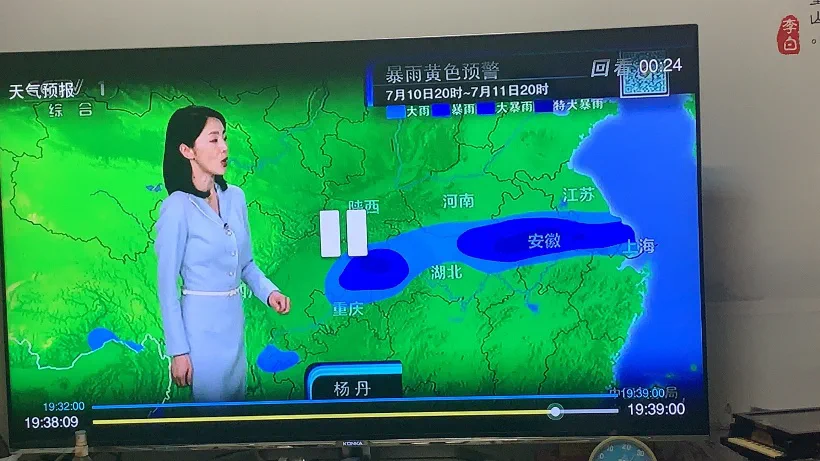
Mid-July was the tail end of the plum rain season, and the rain belt along the northern edge of the subtropical high was jumping north from the Yangtze basin to the Huai River basin. When we checked the forecast before leaving, it looked like we would reach Xuzhou just in time (unluckily) to catch the heart of the main rain belt, which had only just moved off from Nanjing. Once in Xuzhou, we first swung the car over to the Han tombs at Guishan for a quick look around, and by then the rain was getting heavier and heavier. By the time we had beaten a hasty retreat and gotten onto Xuzhou’s elevated ring expressway toward our hotel, I happened to be the one driving, and that was exactly when the downpour hit its peak. Soon there was a serious jam ahead of us. At first we assumed it was just cars crawling along in the storm, but after inching forward a while we discovered that the sky had, in fact, fallen: up ahead, the elevated road was about to dip into a tunnel to pass under a railway bridge, and the tunnel under the bridge was already full of water! Who would have thought that those flooded-underpass stories I used to read about in the newspaper would actually happen to us? But by then we had no choice. The elevated road was closed off, with no exits, so all we could do was let the stream of traffic sweep us along.
When we got under the bridge we breathed a sigh of relief: only about half the road was submerged in yellow water, and one lane was still just barely passable, with everyone queuing up to get through it. After we followed them through the underpass, we soon found out where all that water was coming from. Right after the underpass came another stretch of elevated road built up against a hillside, and the muddy yellow flash flood pouring off the hill, with nowhere to go once it hit the road hugging the slope, came rolling down the outermost lane and straight into the underpass. Since we were in one of the right-hand lanes, we would have to drive through the part of the road covered by the floodwater. It was my first time dealing with urban flooding, and I was truly terrified the water would just flat-out kill the engine; my nerves were stretched to the breaking point. As we drove through the flooded stretch, I could hear water slapping against the doors and feel the current pushing the car sideways, and the steering wheel didn’t seem as easy to hold steady as before. Luckily, in the end we made it through with nothing worse than a scare. Later, close to our destination, we hit standing water again at a spot where we needed to turn right, so we had no choice but to skip the turn, go straight, make a U-turn, and then turn left.
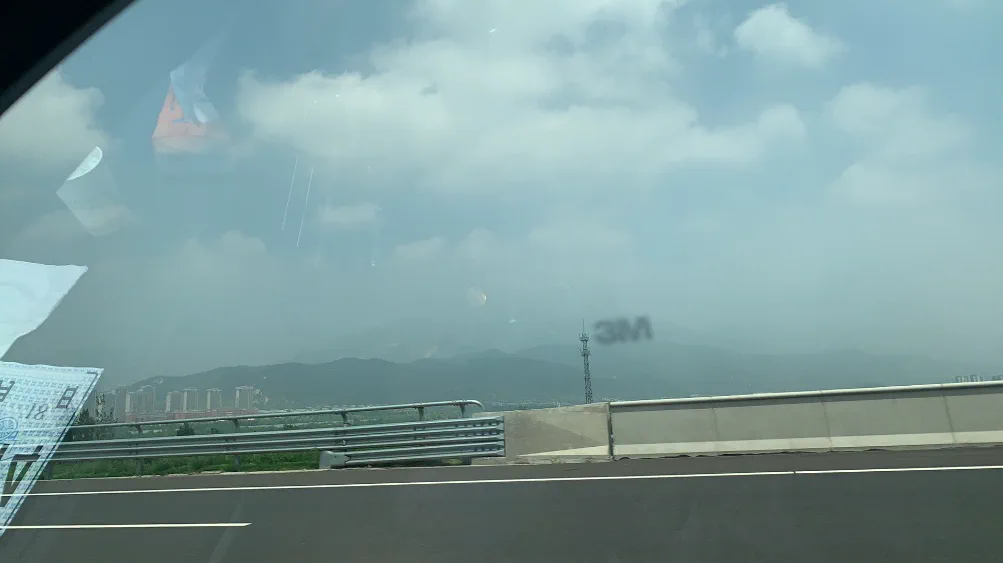
The next morning the rain had cleared, and my mom and I hit the road early. The main reason for this trip home was to see my grandma. When we reached Dingzhou, I could barely recognize the place. Along both sides of the main boulevard there was now, unthinkably, a whole central business district, with movie theaters and so many restaurant signs that your eyes couldn’t keep up. It had a bit of the vibe of Deji Plaza, the swanky mall back in Nanjing. When I was little, the roadside was nothing but rickety tricycle carts selling snacks and candied hawthorn skewers. If I were a kid growing up in Dingzhou now, my childhood would be pretty happy too, right? I thought.
Arriving in Dingzhou
When we got home, my grandma was sitting on the sofa watching TV, all smiles. The silver hair on top of her head seemed even thinner than before, and she had lost quite a bit of weight, maybe because of her diabetes. As I sat down beside her, a nervous thought crossed my mind: while I was in Canada, Grandma had had a mild stroke and spent a few days in the hospital, so how were her cognitive functions holding up now? The moment she spoke, I breathed a sigh of relief. Thank goodness, she still recognized me. It’s just that, compared with three years ago, she spoke more slowly, and her voice trembled a little. Her hearing had gotten worse, too; I had to practically shout when I talked to her. For some reason, Grandma has always flatly refused our suggestions that she wear a hearing aid. Thinking about her life without one, I felt a sharp pang in my heart. Her legs barely work anymore, so she basically never leaves the house, and her contact with the outside world is next to nothing. Like this, unable to see clearly, unable to hear clearly, she must find even the TV and the newspaper hard to follow. I couldn’t help wondering: what joy could there be in such a closed-off, rigid life? Every day the same three meals, the same rest… it wouldn’t be an exaggeration to call it imprisonment, would it? When I get old, will I end up living like this too? I didn’t dare think any further.
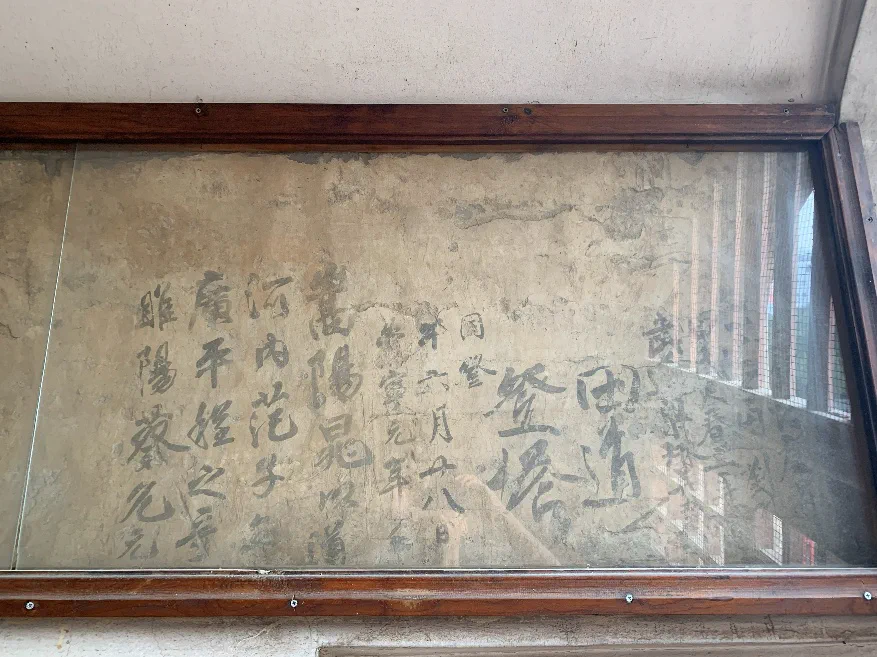
We first spent about two days resting up in Dingzhou. My elder uncle took me around the newly opened history museum, and then we went to climb Dingzhou’s Kaiyuan Temple Pagoda once more. Shameless plug: the Kaiyuan Temple Pagoda is the tallest surviving brick pagoda in China! The last time I had climbed it must have been when I was very small; I had no memory of it at all. Since my elder uncle had also had a brain hemorrhage a while back and wasn’t steady on his feet, he simply waited at the bottom and let me climb alone. Each step of the staircase was a good half meter high, and to haul yourself up you had to grab the iron chains running along both sides of the narrow passage. Once I reached the top level, I started exploring the space inside. On the walls were lots of ink inscriptions left by people centuries ago, protected under glass. Some were poems by men of letters; others were just a little line along the lines of today’s “So-and-so was here,” only in flowery classical language. My mind couldn’t help conjuring up a scene: a scholar of old, in a coarse cotton robe and cloth shoes, scrambling up the pagoda on all fours, huffing and puffing. Whatever serene, unflappable composure scholars were supposed to have must have gone straight out the window in such an undignified scramble! (That said, for Wang Anshi to climb a pagoda and still come out with a poem like “Climbing Feilai Peak,” the one about standing on the very top floor, unafraid of the clouds that block the view, the man really did have some character.) Haha, but really, scholars were ordinary people too, scribbling “was here” just like everyone else. It made me wonder: maybe the so-called “uncivilized behavior” of today’s tourists, all those wobbly “So-and-so was here” and “xxx love xxx” scrawls, will someday become cultural relics protected under glass, too? Now that would be a hilarious sight. Seen this way, there’s really no such thing as “civilized” or “uncivilized” at all.
The Trip to Zhangbei
While we were resting up, my mom let me in on a plan: she wanted to drive Grandma, my elder uncle, and my younger uncle to the “Grassland Sky Road,” an internet-famous scenic route near Zhangbei (a county north of Zhangjiakou), and she asked what I thought. I voiced some worry about whether Grandma’s health could handle the bumpy journey. My mom put it bluntly: if we didn’t go now, there might never be another chance. She went on to explain that precisely because it was so risky, she hadn’t told anyone about the plan, especially not my dad, who would definitely object. Maybe this will be the last trip of Grandma’s life, I thought to myself. Of all her brothers and sisters, my mom is the one who lives farthest from home, and now she wanted to seize this precious chance to do her duty as a daughter. How could I say no? So I agreed on the spot to take turns with her driving to Zhangjiakou. Unexpectedly, when my mom came clean to everyone about the trip, Grandma objected fiercely. We tried to talk her around for a while, to no avail. My mom told me privately that Grandma was probably a little afraid of dying away from home. Only then did I realize that although Grandma had a fiery, strong-willed temperament and was no superstitious, backward woman of the old society, she couldn’t entirely escape the influence of thousands of years of simple rural culture. To our delight, after a while Grandma came around and agreed.
The Taihang Mountains
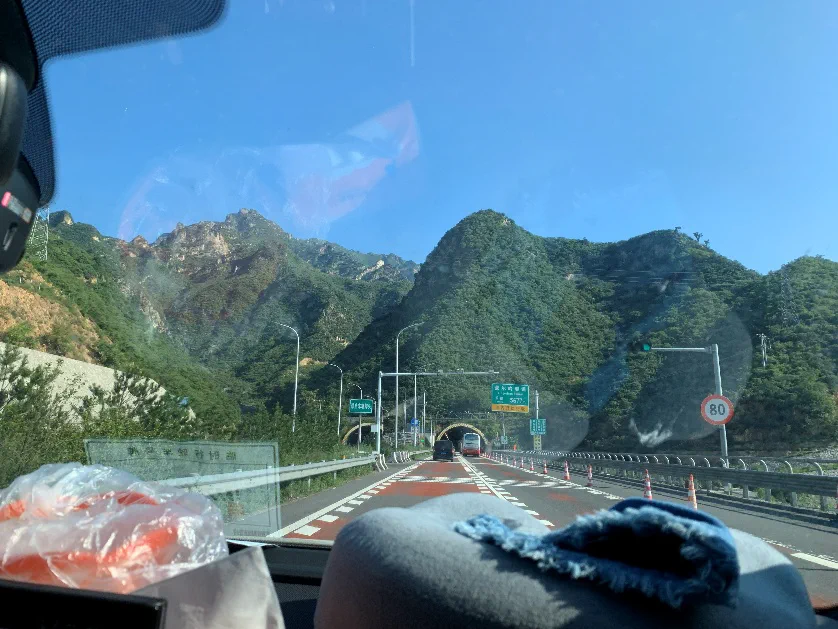
At around 6 the next morning, our little party set off before the summer heat could rise. My mom and I took turns driving the whole way, the two of us up front, with Grandma, my younger uncle, and my elder uncle in the back. Before we left, I had assumed we would take the Beijing–Shijiazhuang Expressway up to Beijing and then head on to Zhangjiakou, but the route the GPS planned went by the west instead. We would first head west through Quyang, then north across the Taihang Mountains by way of Laiyuan and Yuxian, and finally follow the valleys along the Sanggan River north to Zhangjiakou. Of course, I pieced this route together from the map afterward; at the time, I hadn’t realized we would be crossing the Taihang range. At the start of the trip, Grandma was in pretty good spirits and could still tell where we were. Around Quyang, hills a few dozen meters high started popping up on both sides of the highway. My elder uncle remarked that once we got into Laiyuan, it would be nothing but mountains. Soon enough, I realized we had entered the mountains. None of us knew these roads. Long tunnels came one after another, and the speed limit dropped to 80–90 km/h. It reminded me of when I was very little and we drove from Nanjing to Xi’an through the Qinling Mountains. It was the same there: you would come out of a tunnel a dozen-odd kilometers long and, before you had even caught a glimpse of the sky, plunge straight into the next one, another dozen-odd kilometers. A world without sun, practically.
Just as I was getting used to the dim tunnel lights, the highway suddenly burst out of the mountains into a wide valley, and in an instant the tunnel turned into a viaduct a hundred meters high! Still reeling, I glanced to my right and saw something even more spectacular: at the edge of the flat valley floor, a whole cluster of mountains rose up without warning! They towered there, their sheer cliffs almost at right angles to the ground, like a row of sharp teeth erupting from the gums of the earth, upright and majestic, inspiring awe. Seen from afar at that moment, our hundred-meter viaduct must have been nothing but a negligibly thin strand of floss, winding around near the roots of those teeth. Such raw, sweeping grandeur… could this be the Taihang? I thought, my heart surging. Then this must be the first time I had ever looked up at the Taihang. In that instant, a line of Li Bai’s suddenly came to me: “I would climb the Taihang, but snow fills the mountains.” At the foot of the Taihang, even the Poet Immortal himself would be hard-pressed not to “draw his sword, gaze all around, his heart lost and adrift.”
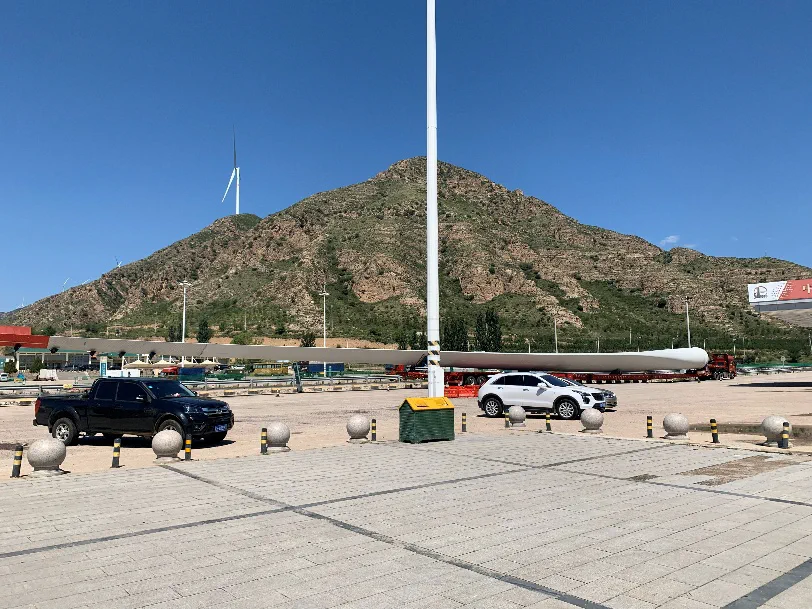
Unfortunately, I was driving at the time, so I had to snap my eyes back to the road ahead. After all, the tension of driving on a viaduct a hundred meters up was every bit as strong as the impact of the Taihang itself. I’m not afraid of heights, but somehow the car felt weirdly light and floaty (come to think of it now, there may have been a crosswind!), so I had to concentrate extra hard. Even with my processing power stretched thin, my brain still caught something odd: if we were climbing into the Taihang from the North China Plain, heading from southeast to northwest, the mountains should have been on the left side of the road. So why were they on the right? Checking the map afterward, I learned that by then we had actually already crossed the Taihang through that string of tunnels and were in the Grand Canyon of the Sanggan River, which meets the northern foothills of the range. The map showed that here the Taihang runs exactly northeast–southwest. Well, that explained it. And the Sanggan River basin we were in connects to Datong in the west and leads east to the Zhangjiakou–Xuanhua basin, south of which lie Badaling and Juyongguan. After driving a while longer, sure enough, the road signs said this was the Sanggan River Grand Canyon, and that we would soon be passing through Yuxian.
Echoes of History
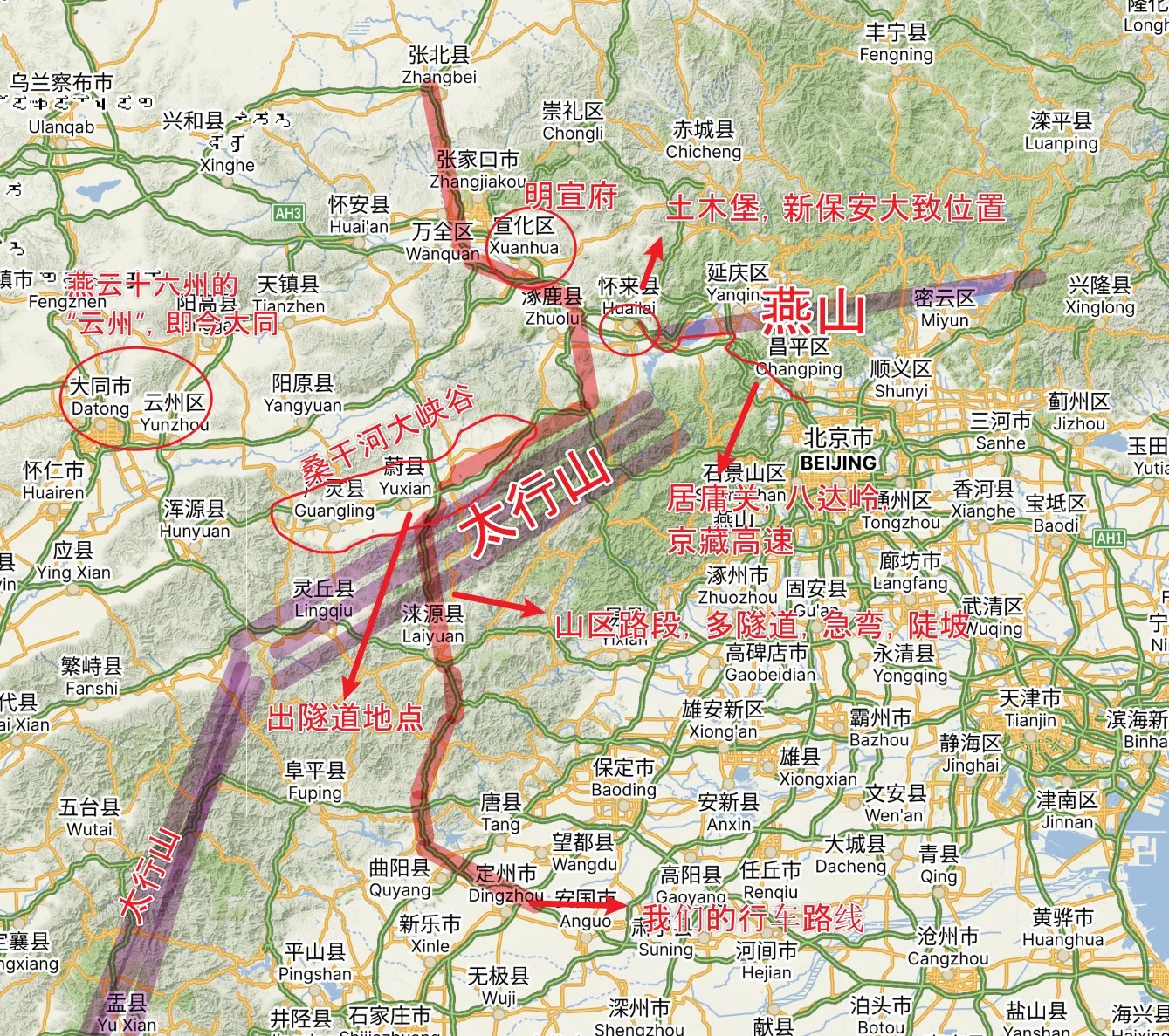
At this point, those of you who know your Ming history may be feeling your DNA start to tingle: why do these place names sound so familiar? Isn’t this where the Tumu Crisis happened? That’s right. This very Yuxian was the hometown of Wang Zhen, the all-powerful chief eunuch of the Ming dynasty’s Zhengtong era. It was he who, simply because he didn’t want the wheat fields here trampled, ordered the Ming army to detour northeast from Datong through Xuanfu to come in through Juyongguan, which ultimately led to defeat in the field and the capture of Emperor Yingzong. Later, comparing maps, I learned that Xuanfu is actually today’s Xuanhua District of Zhangjiakou, also right on our route. So, in a way, this trip of ours retraced part of the Ming army’s march back then. Thinking about this, lying on my stomach on the bed in our old family home in Dingzhou late at night, staring at the digital map, I felt an inexplicable flutter in my heart. It was as if, beneath the hush of that night sky, past and present were quietly folding into one.
I soon made another discovery. In the basin between Zhangjiakou and Badaling lies Huailai County, and in it there is a “Tumu Town.” This must be Emperor Yingzong’s happy place, then. And that’s not all: shift your gaze northwest of Huailai and there’s a “Xinbao’an Town.” Isn’t that where Fu Zuoyi’s 35th Army was surrounded and wiped out during the Pingjin Campaign… Haha. It’s a bit of a dark joke, but I couldn’t help laughing out loud. Clearly this basin linking Beijing and Zhangjiakou has been strategic ground since time immemorial.
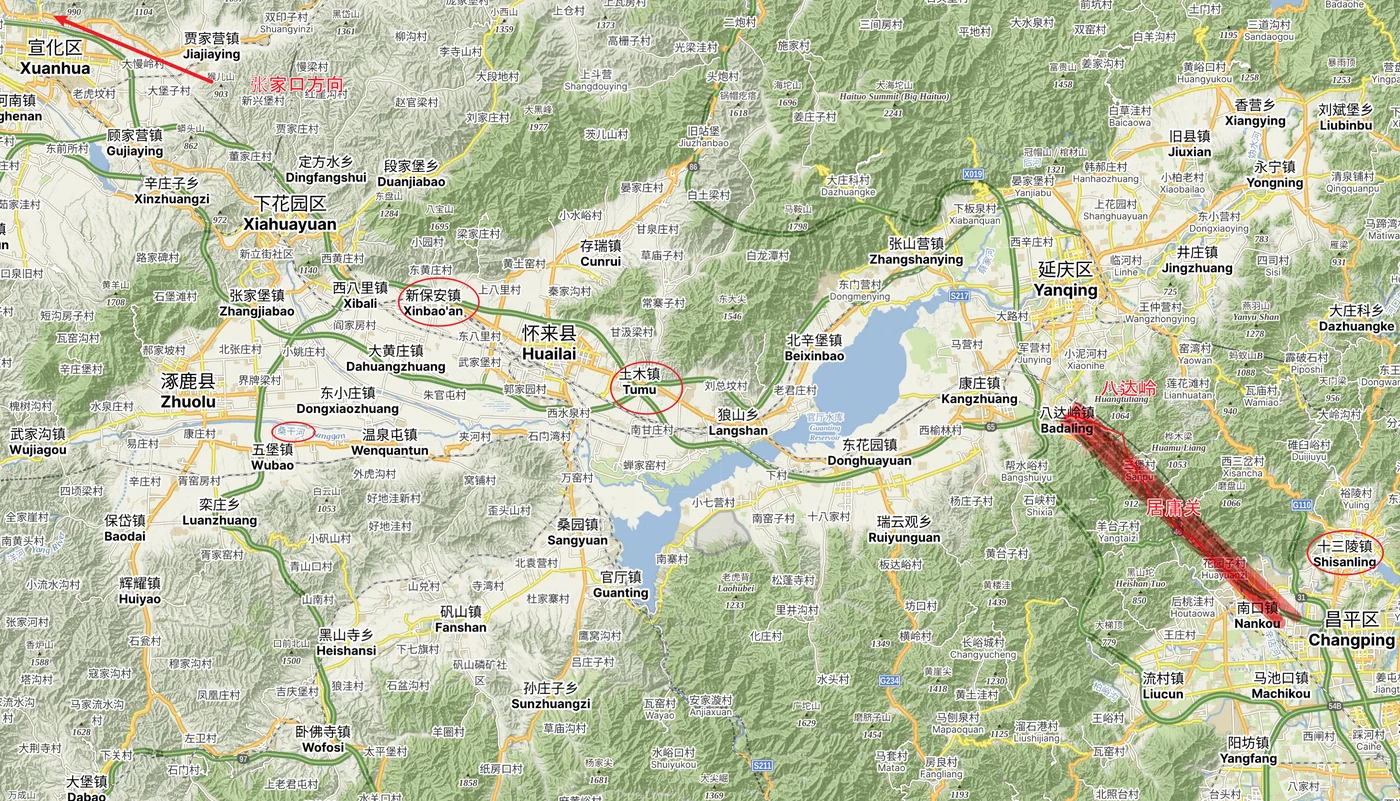
My eyes moved on to Juyongguan and Badaling on the map. The Beijing–Tibet Expressway threads its lonely way out of Beijing through the narrow valley between Juyongguan and Badaling. This gateway to the capital, once guarded by vast armies under the old dynasties, has gone from impassable natural barrier to open thoroughfare. It really gives you pause. Seeing this also reminded me of the first time my mom and I went to Beijing on vacation, when I was little. The tour agency had claimed it would take us to the Great Wall at Badaling, but in the end it only gave us 40 minutes at the Juyongguan section instead. Even more heartbreaking: the two of us were only a few minutes late, and the tour bus left without us. Fuming, we came across a taxi driver, paid him 300 yuan, and had him take us to Badaling, the Ming Tombs, and other places that weren’t even on the tour. Later, around when the shopping stop was probably due, the agency finally remembered us and even called to tell us to come back. Naturally, we said no. Buh-bye now!
But back to our story. We drove along the basin toward Zhangjiakou and Zhangbei, and on the last stretch we suddenly hit a traffic jam and were stuck for about an hour. I was driving again, and all that stop-and-go left my head foggy and throbbing. Just then Grandma, who had slept soundly the whole way, woke up at the worst possible moment and began asking in a quavering voice, “Where is this? I want to go back!” Her voice was full of helplessness and unease, and no matter how we explained, she kept on asking, demanding, and fussing, over and over. That negative energy soon got to me, and my headache grew worse and worse, something that had never happened to me before. As the driver, a traffic jam is irritating enough already; on top of everything with Grandma, I got even more on edge. After getting off the highway, we found a local restaurant. While I was parking, I don’t remember what happened (maybe my head just hurt even more?), but my patience finally hit its limit. I badly wanted some outlet to vent through, but there was no one to vent at. My mom had been arranging the whole trip single-handedly, and she had worked so hard. Grandma was already confused; what could anyone do? Nobody was at fault, but the atmosphere was just so suffocating. In the end I talked myself around: I had to back my mom up. So, in a fit of rage, I… kept on putting up with it. It was really, really hard. At dinner, Grandma also made a fuss and refused to eat, which made things awkward for all of us. I kept putting up with it. After dinner we drove off toward the guesthouse we had booked in advance. The road was tough to drive, with constant curves and only one lane in each direction, and sometimes the trees on both sides blocked the view, so I had to take every bend with extreme care, which was utterly draining. My head felt like it was splitting open; I was almost at the end of my rope. Luckily, once we left the city behind, we gradually drove out into the vast grasslands, and the scenery all around was so open it lifted the spirits. Even so, my headache was still terrible. The moment we got to the guesthouse, I collapsed onto the sofa and fell asleep, and just before I blacked out I dimly heard my elder uncle say, “Let him sleep a while…”
A little over an hour later I woke up, and my headache was mostly gone. I learned that Grandma, worn out, had also fallen fast asleep. My elder uncle offered to stay at the guesthouse and watch over her, so that my mom, my younger uncle, and I could go check out nearby Yehuling, Wild Fox Ridge. Yehuling is a hill rising out of the boundless grassland. At the history museum halfway up, I learned that the Battle of Yehuling, the decisive battle before Genghis Khan pushed into the Central Plains, was fought right here. Hard to believe: this park, now teeming with tourists (well, not that many, actually), is where the main field army of the Jin dynasty was annihilated centuries ago. From the main summit of Yehuling, the rolling grassland for a dozen-odd kilometers around lay spread out at my feet. A few roads crisscrossed it, with cars the size of sesame seeds flickering in and out of view as they drove across pastures that seemed to go on forever. I tried to imagine generals of old standing here, surveying their great armies clashing in battle, but I just couldn’t picture it. Part of the reason might have been all those tall white wind turbines dotting the grassland, which kept pulling me out of the scene. Everywhere I looked, rows upon rows of turbines lent the wild grassland a dose of modern-day vitality. These days, the land around Yehuling has become a home where people live and work.
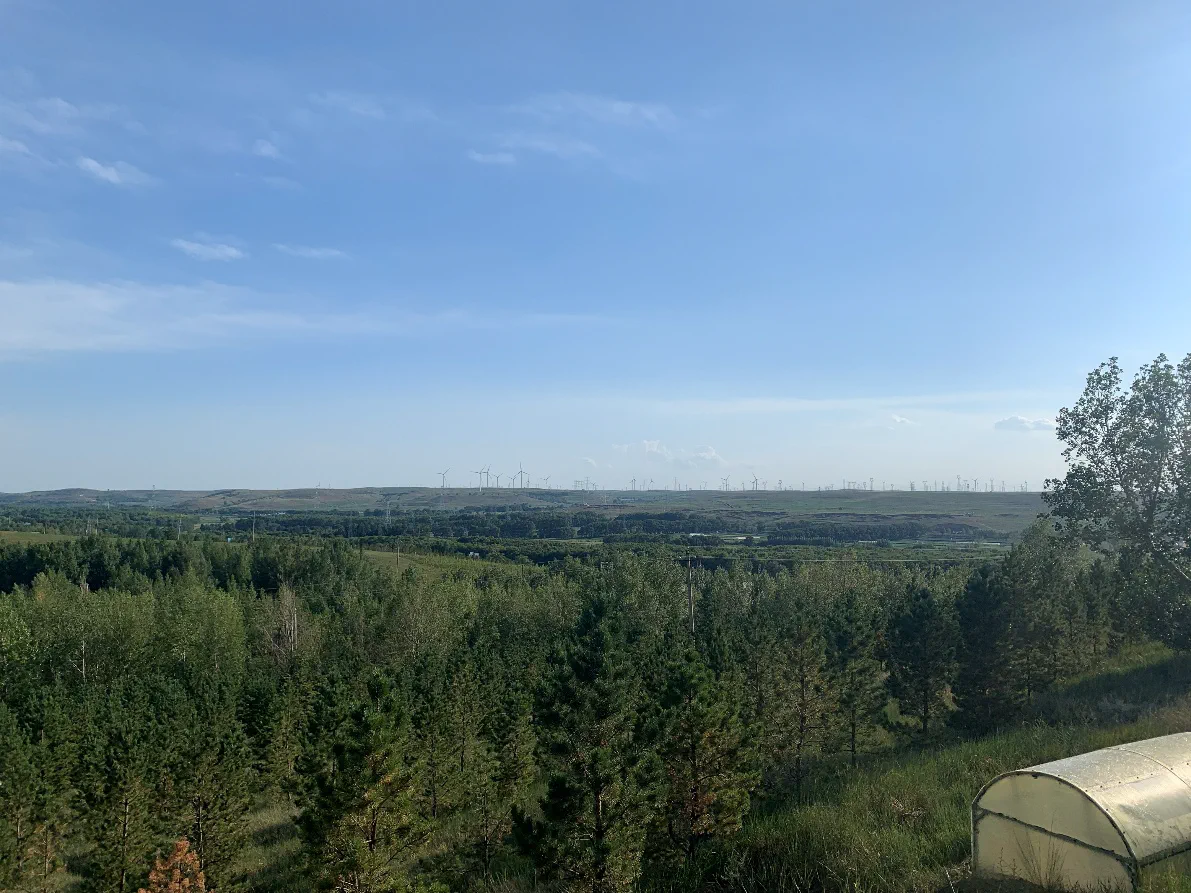
I have to say, the forbidding Taihang and the vastness of the grassland struck me, and stayed with me, far more than the lush green peaks I’ve seen in Yunnan, Guangxi, and Guizhou, or the envy-inducing emerald waters and green mountains of Zhangjiajie, Jiuzhaigou, and Banff that fill my friends’ WeChat feeds. How many dynasties have these borderlands of Yan and Yun watched rise and fall? How many iron-shod cavalry hordes from the steppe, bent on plundering the Chinese heartland, has the towering Taihang held back? And yet, at this moment, the ancient mountains say nothing, simply basking quietly in the summer morning light. They are like an old soldier who has laid down his armor and come home from the battlefield to his fields, sitting in the sun at the entrance to the village, keeping all the shifting storms of the old battlegrounds locked in his heart, just smiling and savoring a hard-won peace. The once-vital frontier, the Sixteen Prefectures of Yan and Yun that Emperor Taizong of Song spent his whole warmongering life failing to win, are at last part of one united China.
The next day, Grandma had recovered some of her energy, and we spent the day exploring the Grassland Sky Road scenic area. Everyone (Grandma included) had a wonderful time.
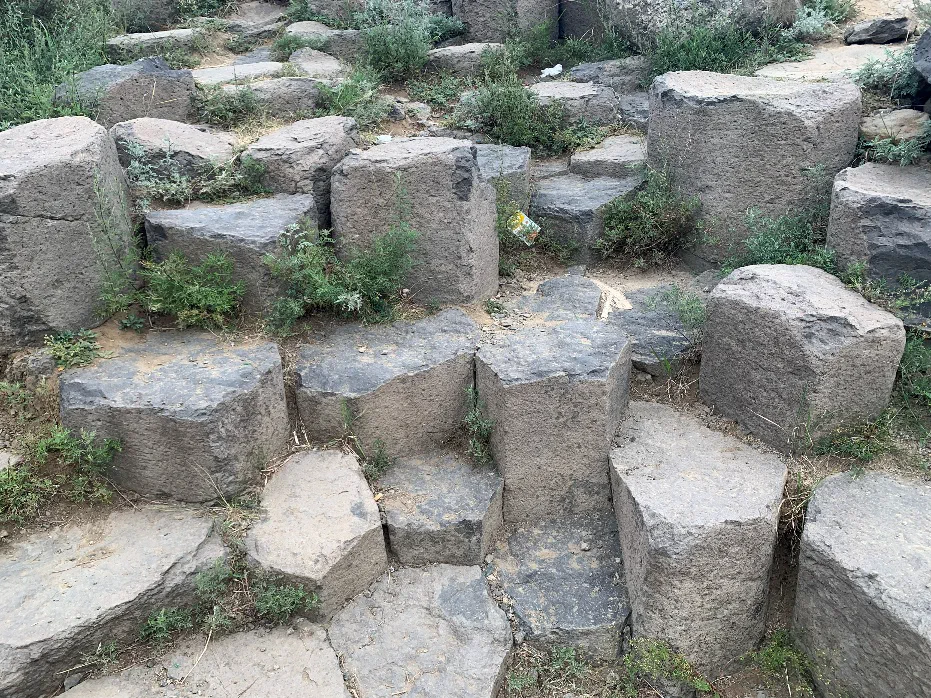
Back to Dingzhou
On the way back, my mom drove first. Around lunchtime, we grabbed a few steamed buns at a rest stop in the middle of nowhere and kept going. But before long, my mom said she was too sleepy to drive, so at the next rest stop we switched and I took over. Soon the car fell completely silent: everyone but me was asleep. Grandma and my two uncles in the back, naturally, but even my mom in the passenger seat had dozed off. She, who was always so full of energy and never one to admit defeat, was this exhausted too. Just then we were heading back into the Taihang Mountains, one long high-speed descent, nothing but tunnels and sharp curves. Even though the speed limit had dropped to 80, it still felt a bit fast to me, and I could feel the centrifugal force in the turns. But all the cars around me were going that speed, so I couldn’t slow down any further. In the longest tunnel, I realized that if I didn’t touch the brakes, the car would keep slowly picking up speed. Was the slope really that steep??? So I had to drive with 150% concentration. I absolutely could not have an accident in the mountains: the lives of a whole carful of sleeping family were in my hands. A sense of responsibility suddenly washed over me. Had the baton that used to be in my mom’s hands finally been passed to mine? And so, in a deathly silence, all alone and tense as could be, I drove the entire hour and a half of that plunge down through the Taihang, with only one old song after another on the car stereo for company. By the time we reached Baishi Mountain, everyone was waking up one by one, and Grandma started asking nonstop when we’d be home. At that moment, all that was left in my heart was relief and comfort (and also, I was dead inside ()).
That night, my mom and I talked in our room about how Grandma was doing. I truly never imagined that the grandma who, just four years earlier, could still tell us stories about the “Japanese devils” from the war with such sparkle and spirit would end up like this. The more I talked, the more worked up I got. It hit me that maybe, many years from now, my mom would become like this too, and I really couldn’t bear to imagine it. But sooner or later, I’ll have to face death on my own, won’t I? Don’t people say that our parents are the last barrier standing between us and death? But when that day really comes, what will it be like… I’m a master’s student, not graduated yet (I hadn’t back then; I have now), and the future is uncertain too. I don’t even know if I’ll find the right person to walk the second half of life with. Maybe I really will die alone. All by myself. At that thought, the emotions I had bottled up for far too long finally burst out. All the frustrations and hurts of four years alone abroad came flooding back at once. The pressure and the endless setbacks, in my studies, in daily life, socially, the failure of my first love, and so on: all these years I had quietly swallowed every grievance on my own and had never once cried out loud. I remember that on the day of the breakup, I just went for a walk and let the tears slide silently down my face, still trying my hardest to hold back the flood of feeling. I’ve always been a deeply sensitive person, prone to overthinking; it was only because I was on my own far from home that I tried so hard to wear the mask of rationality. But in my heart, I’ve probably always been that timid little grade-schooler. And yet that same timid little grade-schooler, through middle school, high school, and on into college, never once opened up to anyone, and got through every hard time alone. Thinking back on it now. Whenever my parents fought, each of them would often come to me to pour their heart out. But when I had troubles, who did I go to? I didn’t want to bother my friends. Didn’t want to show anyone my vulnerable side. All my dad would ever say was that real men don’t cry. I went to no one. But that night, I truly couldn’t hold it in anymore. In front of my mother, for once, I broke down and sobbed out loud. My breath came so fast and ragged that I felt like I really couldn’t breathe. The tears came in wave after wave, and still it wasn’t over. After what felt like twenty minutes, everything finally fell quiet again. I seem to remember my mom saying at first, “It’s okay, it’s okay” and “Everyone’s day comes eventually,” but these attempts at comfort were in vain. Then she said, if you need to cry, just let it out. And I cried even harder.
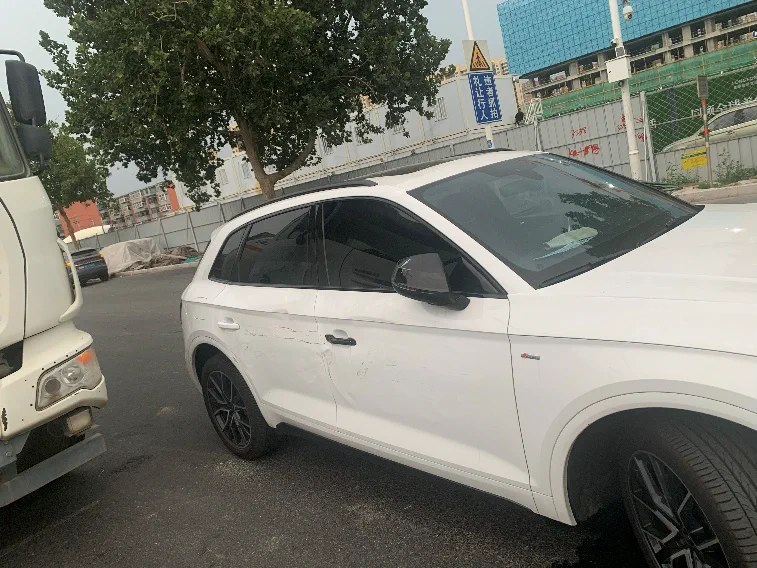
Later we also went to Baoding, Xibaipo, and a few other places, but that’s a story for another day.
Jinan, City of Springs
On the way home, my mom and I took turns driving as usual. On the first afternoon we reached Jinan and went to see Daming Lake. When I spotted a sign in the scenic area reading “Temporary Headquarters of the Nationalist Garrison, Battle of Jinan,” I laughed again, not very charitably. That evening we feasted on Daming Lake vinegar fish (vastly superior to Hangzhou’s infamous West Lake vinegar fish), Jinan-style braised pork belly, and other local delicacies, and with our bellies full we strolled for a long time through the moat park of the City of Springs. Jinan’s humid night air held on beautifully to the warmth of the daytime sun, enough to make you sweat a little without feeling stuffy, and now and then a little breeze would blow through, pleasantly cool. We didn’t have any destination in mind; we just ambled slowly from one spring to the next. On the public square, the aunties were dancing up a lively storm, and I think there were fireworks, too (or were they just points of light in the sky? I can’t quite remember anymore). Every so often, we would fill a bottle of spring water at one of the public fountains and down it in one go, the coolness running from my throat all the way to my stomach. So refreshing! That was the only moment in these past few years when I truly set aside all the clutter in my head and let my taut nerves relax.
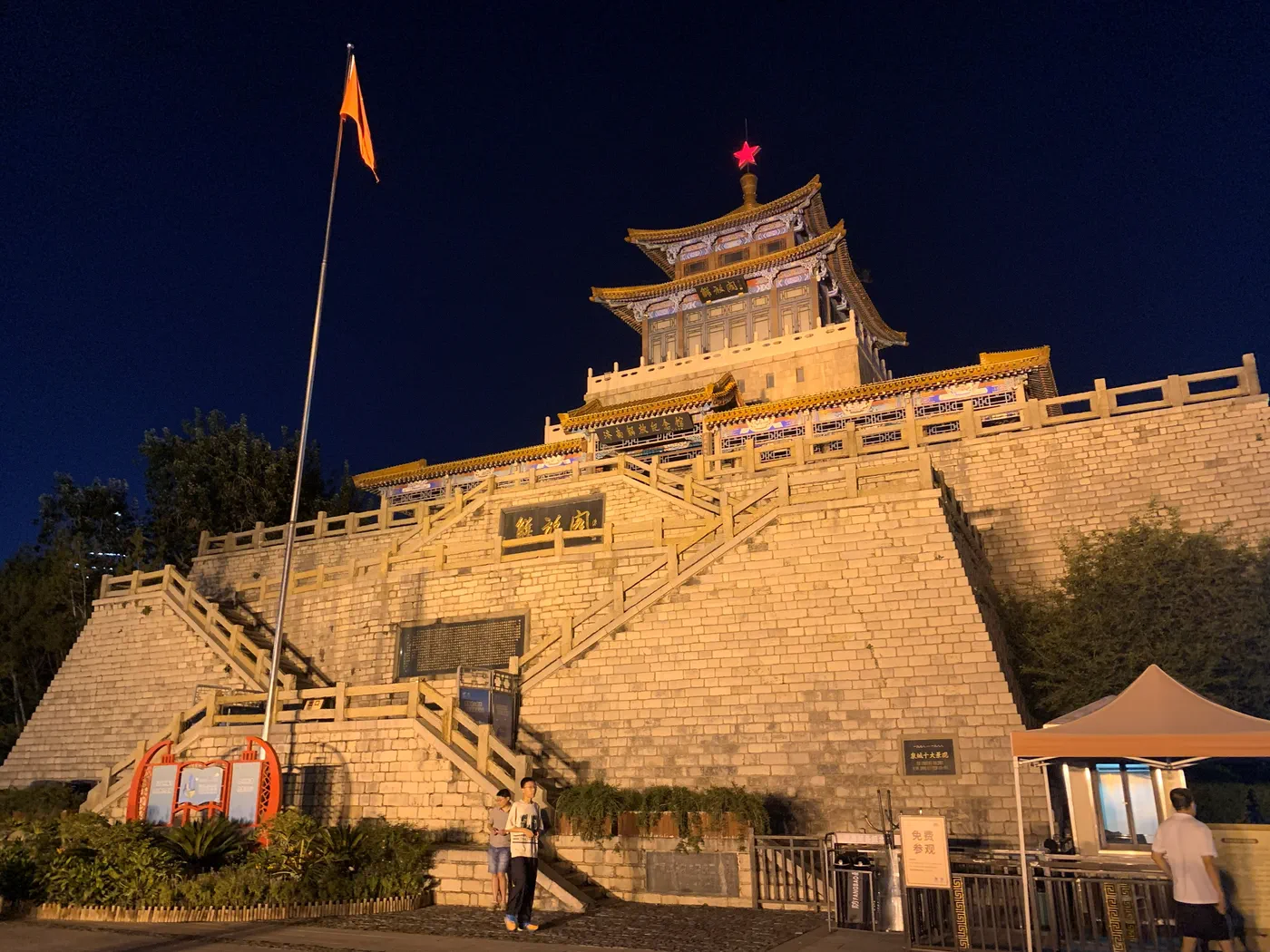 Jinan’s Liberation Pavilion
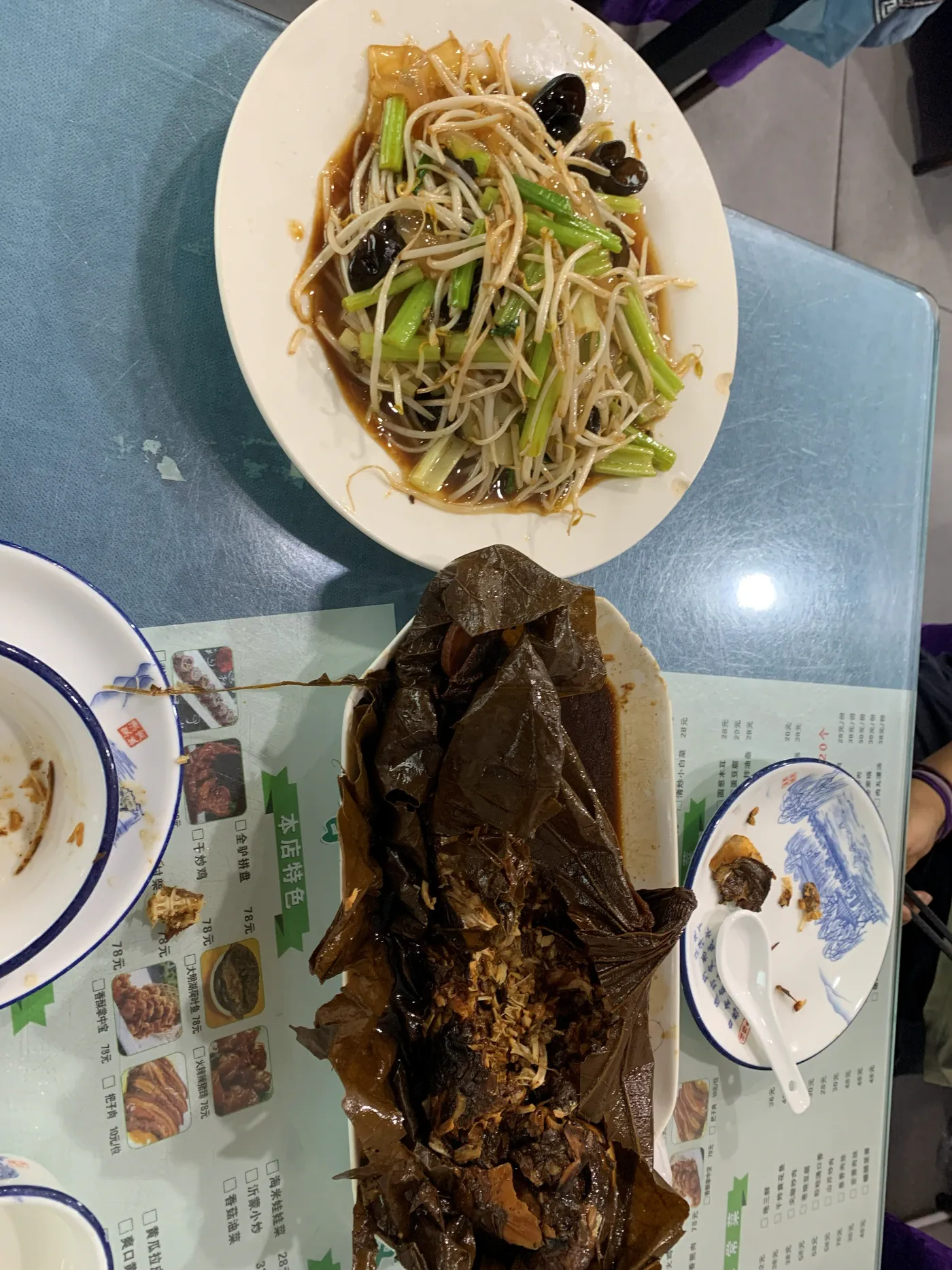 Vinegar fish
The next day, we set off again. Near Huainan we ran into torrential rain from the remnants of a typhoon moving north. Under the pounding downpour, the wipers were completely useless; everything ahead was a blur, and all we could make out was the red of the taillights in front of us and the yellow of their hazard lights. We slowed to 40–50 km/h, and it took about half an hour to drive out of the rain. That night, our journey finally came to an end.
Well. What I wanted to write down. Ends here.